

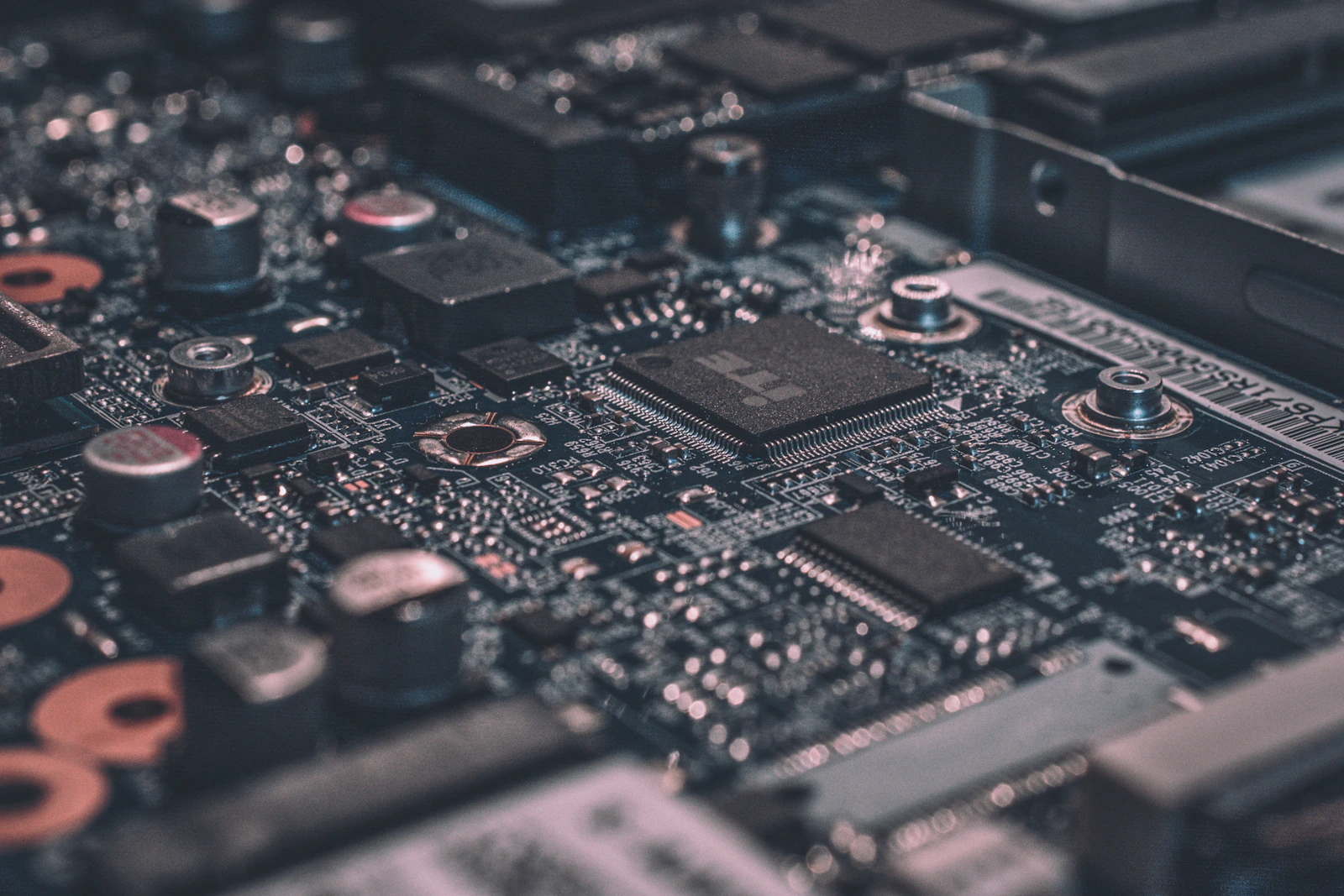
Chip stocks have come under pressure as investors weigh several concerns at once: persistent inflation, the enormous cost of building artificial intelligence infrastructure, and the debt that some companies may take on to fund their plans. The decline is a reminder that even a fast-growing technology sector is not protected from changing market expectations. Demand for AI computing can remain strong while investors become less comfortable with the price they are paying for companies connected to that demand.
Why semiconductor shares matter so much
Semiconductors sit at the centre of modern technology. They power smartphones, personal computers, data centres, cars, networking equipment, industrial systems, and the servers used to train and run AI models. When investors become worried about chipmakers, the concern can spread beyond one industry because chips are an essential input for so many businesses.
The AI boom has made the semiconductor industry especially important to financial markets. Companies building advanced models need large amounts of computing power. Cloud providers are expanding data centres, businesses are experimenting with AI tools, and governments are paying closer attention to computing capacity as a strategic resource. That has created major opportunities for designers of advanced processors, manufacturers, memory suppliers, and companies that provide semiconductor production equipment.
However, a promising industry is not automatically a good investment at every price. Share prices reflect expectations about future profits, growth, competition, and risk. If investors previously expected demand to grow very quickly, even a healthy business update can disappoint if it falls short of those high expectations. This is one reason chip shares can experience sharp moves when the wider economic outlook becomes uncertain.
Inflation changes the investment calculation
Inflation matters to technology stocks because it influences both company costs and the price investors are willing to pay for future earnings. When wages, electricity, construction materials, equipment, and transport become more expensive, businesses must either absorb those costs or pass some of them on to customers. Semiconductor manufacturing is particularly capital intensive. Building and operating advanced fabrication facilities requires specialised machinery, reliable power, clean environments, skilled staff, and large ongoing investments.
Inflation also affects interest rate expectations. If price increases remain stubborn, central banks may keep borrowing costs higher for longer than investors had hoped. Higher rates can make future profits less valuable in today's terms, especially for companies whose valuations depend on earnings expected many years from now. Investors may therefore reduce the price they are willing to pay for a growth stock even when its products remain in demand.
The effect is not identical for every company. A supplier with strong pricing power, a healthy balance sheet, and durable customer relationships may be better placed to handle rising costs than a business with thin margins or heavy borrowing. Some companies may benefit from long-term contracts, while others may be exposed to changing customer budgets. Investors need to look beyond the broad label of chip stocks and understand the business model behind each share.
The cost of the AI race
Building AI infrastructure takes far more than purchasing a few processors. Large projects can involve land, buildings, power connections, cooling systems, networking equipment, storage, security, and specialised chips. These projects can require years of planning and significant upfront spending before they produce a return. The investment may be sensible if customers pay enough to support it, but the scale of the commitment creates questions about timing and profitability.
Technology companies are racing to provide AI services and computing capacity. Moving early can help a company attract customers, build relationships with developers, and establish a place in a market that may become very large. Yet spending aggressively also creates the risk that demand develops more slowly than expected, hardware becomes outdated quickly, or competitors offer similar services at lower prices.
Investors are increasingly interested in what the spending will produce. Announcing a large data centre budget can signal confidence, but it does not by itself prove that the investment will generate attractive returns. A company must eventually turn its infrastructure into revenue and profit. If the cost of equipment, electricity, financing, and maintenance rises faster than customer income, the economics can become less appealing.
This is the central tension behind the AI investment story. The technology may transform many industries, but the companies financing its expansion still have to manage costs and earn returns. A market correction can reflect doubts about the pace of those returns rather than a belief that AI has no future.
Why debt has become part of the conversation
Debt can help a company fund a large project without paying the entire cost from current cash reserves. Used carefully, borrowing can support growth and spread the cost of long-lived assets over time. But debt also creates fixed obligations. Interest and principal payments must be managed even if customer demand weakens or a project takes longer than planned to become profitable.
For AI infrastructure, the timing mismatch can be important. A company may need to spend heavily today on facilities and equipment while the revenue from those assets develops over several years. If the company borrows to bridge that gap, it must be confident that future cash flow will be sufficient. A change in interest rates, a delay in construction, or a reduction in customer demand can make the plan more difficult.
Investors also consider the quality of the borrowing. They look at the amount of debt compared with cash flow, when repayment is due, whether interest rates are fixed or variable, and whether a company has enough liquidity to handle a weaker period. Debt is not automatically a sign of trouble. The concern grows when borrowing rises quickly while the expected returns remain uncertain.
It is also important to distinguish between chipmakers and the customers building AI systems. A semiconductor supplier may receive payment when it sells equipment, while a cloud company may need to finance a data centre and then earn revenue over a much longer period. Those businesses can face different risks even when they are part of the same AI supply chain.
Strong demand does not remove valuation risk
One of the most confusing parts of a market decline is that the underlying technology story may still look positive. Companies may continue ordering chips, data centres may continue to expand, and AI tools may keep reaching new users. Why, then, would share prices fall?
The answer is that markets price expectations, not just current conditions. If investors believe a company will grow rapidly for many years, they may pay a high valuation today. That valuation can be vulnerable when interest rate expectations change, costs rise, or doubts emerge about the amount of profit that future growth will generate.
Consider a simplified example. Suppose investors expect a business to grow quickly and value it on the assumption that its margins will remain high. Later, the business reports continued sales growth but also signals that it must spend much more on research, production capacity, or customer support. The company may still be successful, but the profit available to shareholders could be lower than previously expected. The share price can fall as investors adjust their assumptions.
This does not mean every decline is justified or that all chip shares are overvalued. It means the relationship between a company's prospects and its current price matters. Investors need to consider earnings, cash flow, competition, capital spending, and the risks already reflected in the valuation.
Different parts of the chip industry face different pressures
The semiconductor sector is not a single business. Chip designers, contract manufacturers, memory producers, equipment suppliers, and companies that package and test chips have different sources of revenue and different cost structures.
Design companies may benefit from demand for advanced processors, but they can be affected by product cycles, competition, and dependence on manufacturing partners. Contract manufacturers must manage enormous capital expenditure and the challenge of keeping factories utilised. Memory suppliers can be sensitive to shifts in supply and demand, which can cause prices and margins to change quickly. Equipment makers depend on customers being willing and able to invest in new production capacity.
Companies that serve several markets may have more balanced demand than those that depend heavily on one category of customer. A business selling into automotive, industrial, communications, and data centre markets may face a different pattern of risk from a company whose growth relies mainly on AI accelerators. The details matter when investors try to understand why one stock falls more sharply than another.
Supply chains add another layer of complexity. Advanced chips depend on specialised materials, manufacturing tools, design software, and highly technical production processes. Disruptions, trade restrictions, export controls, or delays in expanding capacity can affect costs and sales. Companies may also need to spend heavily to keep pace with new manufacturing requirements.
What investors will watch next
After a period of weakness, investors usually look for evidence that can clarify whether the move reflects short-term anxiety or a deeper change in business expectations. Company earnings and guidance are especially important. Sales growth matters, but so do gross margins, operating expenses, cash flow, inventory levels, and management's explanation of customer demand.
Capital expenditure plans will also receive attention. If major cloud providers continue to raise investment budgets, that can support the outlook for AI hardware suppliers. If they slow spending, postpone projects, or focus more strongly on using existing capacity, investors may question how quickly chip demand will expand. The amount spent is only one part of the story. Investors will want to understand the expected return from that spending.
Interest rates and inflation data can influence the wider valuation environment. A clearer path toward stable inflation may ease concerns about borrowing costs, while renewed price pressure can make markets more cautious. Employment data, consumer spending, energy prices, and broader business activity can also affect expectations for technology demand and corporate budgets.
Finally, investors will look at whether AI customers can turn experiments into repeatable business use. Companies may be willing to test AI products, but lasting demand depends on whether those tools improve productivity, create new revenue, reduce costs, or provide another measurable benefit. The stronger the evidence of useful applications, the easier it may be for infrastructure spending to find a durable economic foundation.
What does this mean for everyday people?
Stock market movements can seem distant from daily life, but semiconductor companies influence the price and availability of many devices and services. Chips are found in phones, laptops, vehicles, home electronics, industrial equipment, and cloud services. A sustained change in supply, production costs, or investment priorities can eventually affect manufacturers and customers.
A fall in chip stocks does not automatically mean that consumer electronics prices will drop. Retail prices depend on inventories, product demand, exchange rates, manufacturing costs, competition, and the timing of product launches. Nor does a share price decline mean that AI tools will suddenly become less capable. Product development and financial markets move on related but different timelines.
For workers and businesses, the more useful question is how AI adoption is changing real operations. Some organisations may find that AI reduces time spent on routine tasks. Others may face implementation costs, training needs, privacy concerns, or difficulty measuring benefits. The long-term economic impact will depend on how effectively these tools are integrated into actual work.
How should individual investors respond?
For individual investors, a volatile market can create pressure to act quickly. Headlines about falling shares may encourage people to sell immediately, while stories about the long-term promise of AI may tempt them to buy every dip. Neither response is automatically appropriate. Decisions should reflect a person's time horizon, risk tolerance, financial goals, and the role a particular investment plays in a broader portfolio.
It can help to separate a company's business outlook from the price paid for its shares. A company may have a strong position in an important market and still be a risky investment if the share price assumes unusually optimistic growth. Equally, a sharp price decline does not make a company a bargain without a careful look at its finances and future prospects.
Diversification can reduce dependence on a single industry or theme, although it cannot eliminate market risk. Investors should understand how much exposure they already have to technology through direct share ownership, funds, retirement accounts, or other investments. They should also avoid using money needed for near-term expenses to take risks in volatile assets.
This article is general information, not individual investment advice. Anyone making financial decisions should check current market information, read company disclosures, and consider seeking guidance from a qualified financial professional.
The bigger question for the AI industry
The current debate is not simply whether AI will grow. It is whether the revenue generated by AI services will justify the cost of building and operating the infrastructure behind them. Both things can be true at the same time: AI can become increasingly useful, and some companies can spend too much or be valued too optimistically along the way.
Technology history offers many examples of important innovations accompanied by periods of financial excitement and disappointment. The eventual winners are not always the companies that spend the most at the beginning. Businesses need sound execution, reliable products, customer trust, sustainable margins, and the ability to adapt as technology changes.
For chipmakers, the opportunity remains tied to the growing need for computing power, but the path will not be perfectly smooth. Customers may adjust budgets, new designs may shift demand, competitors may gain ground, and manufacturing costs may change. Investors will continue weighing these business realities against the potential for long-term growth.
Final thoughts
The pressure on US chip stocks reflects several concerns arriving together. Inflation can keep borrowing costs elevated, AI infrastructure requires significant upfront investment, and debt can make ambitious expansion plans more sensitive to changes in demand or financing conditions. At the same time, semiconductor technology remains central to the development of AI and many other digital services.
The key is to avoid treating a market decline as proof that the entire AI opportunity has disappeared, or treating strong long-term demand as proof that every stock is worth its current price. Company finances, cash flow, competition, valuation, and the returns from AI investment will help determine which businesses can turn technological demand into sustainable results.
What do you think? Are investors reacting too strongly to inflation and AI spending concerns, or is the market asking necessary questions about debt and the returns on data centre investment? Share your view with the AI Era community.
#ChipStocks #AIStocks #ArtificialIntelligence #Semiconductors #TechNews #StockMarket #Inflation #Investing #DataCenters #FutureOfAI #TechnologyNews #AIInfrastructure #MarketTrends #AI Era